The ACTOR Partnership’s
Composer-performer Orchestration Research Ensemble (CORE) Project
Stephen McAdams and Roger Reynolds
| PDF | CITATION | AUTHORS |
Abstract
The Composer-performer Orchestration Research Ensembles (CORE) project of the Analysis, Creation, and Teaching of Orchestration (ACTOR) international partnership sought to achieve both pedagogical and compositional innovation through extensive collaboration as well as through the co-creation of short pieces by composers and performers, with a focus on the science behind the perception of musical timbre and orchestration. Six institutions in Canada, the United States, and Switzerland participated in the project, in which boundary conditions were established for compositions with fixed instrumentation differing across several rounds. The project archived these activities through sketches and scores, workshop recordings, and interviews with participating students, and developed a shared vocabulary for communicating about timbre and orchestration. The collaborative research-creation process, how scientific disciplines usefully illuminate creative procedures, and how idea-testing can be integrated into the creative enterprise are discussed. Three case studies of participating students are presented around the notion of how injecting extra-musical scientific knowledge affects their activities as composers.
Keywords: composer-performer collaboration; composition pedagogy; distributed creativity; perceptual grouping; performance pedagogy; orchestration; semantics.
Résumé
Le projet EROC (Ensembles de recherche en orchestration contemporaine) du partenariat international ACTOR (Analysis, Creation, and Teaching of Orchestration) avait pour objectif de réaliser des innovations pédagogiques et compositionnelles grâce à une collaboration étendue et à la co-création de courtes pièces par des compositeur·rices et interprètes axées sur la science de la perception du timbre musical et de l’orchestration. Six institutions au Canada, aux États-Unis et en Suisse ont participé à plusieurs phases du projet. Le projet a établi des conditions limites pour des compositions avec une instrumentation fixe qui différaient au cours de plusieurs phases. Il a archivé les activités par le biais d’esquisses et de partitions, d’enregistrements d’ateliers, d’entretiens avec les étudiant·es participant·es, et a développé un vocabulaire commun pour communiquer sur les subtilités timbrales et orchestrales. La discussion porte sur le processus collaboratif de recherche-création, sur la manière dont les disciplines scientifiques peuvent éclairer utilement les procédures créatives, et sur la façon dont la mise à l’épreuve des idées peut être intégrée au processus créatif. Trois études de cas portant sur des étudiant·es participant·es sont présentées, axées sur la manière dont l’intégration de connaissances scientifiques extra-musicales influence leurs activités de compositeurs.
Mots clés : collaboration entre compositeur·rices et interprètes ; créativité distribuée ; groupement perceptif ; orchestration ; sémantique ; pédagogie de la composition ; pédagogie de l’interprétation.
Introduction
The Analysis, Creation, and Teaching of Orchestration (ACTOR) partnership was a seven-year project funded by the Canadian Social Sciences and Humanities Research Council (SSHRC). The broad definition of “orchestration” adopted by ACTOR was “the selection, combination, and juxtaposition of sounds to achieve a particular sonic goal.” It thus applies to all music, not just music for orchestras.
ACTOR was organized in three main axes addressing issues of analysis, tool development, and innovation of practice in several domains (Figure 1). Analysis of musical scores, recorded audio, written or transcribed texts, performance nuances, and listener perception were included in the first axis. The second axis concerned the development of technological tools such as the Orchestration Analysis and Research Database (OrchARD) developed at McGill University (which stored perceptual annotations of orchestral pieces according to perceptual grouping principles), the computer-aided orchestration environment Orchidea developed by Carmine Cella at IRCAM and the University of California, Berkeley, the OrchSim multi-track orchestral simulator created by OrchPlayMusic, and finally the online ACTOR Timbre and Orchestration Resource (TOR). The primary output was conceived in terms of a third axis focusing on innovation in orchestration pedagogy by the integration of considerations of timbre and orchestration into music studies and music composition. The Composer-performer Orchestration Research Ensembles (CORE) Project represents both pedagogical innovation and compositional innovations that feed material to the analysis axis (blue arrows), the results of which then fuel innovation in music studies and provide materials for OrchARD and the TOR (green arrows).
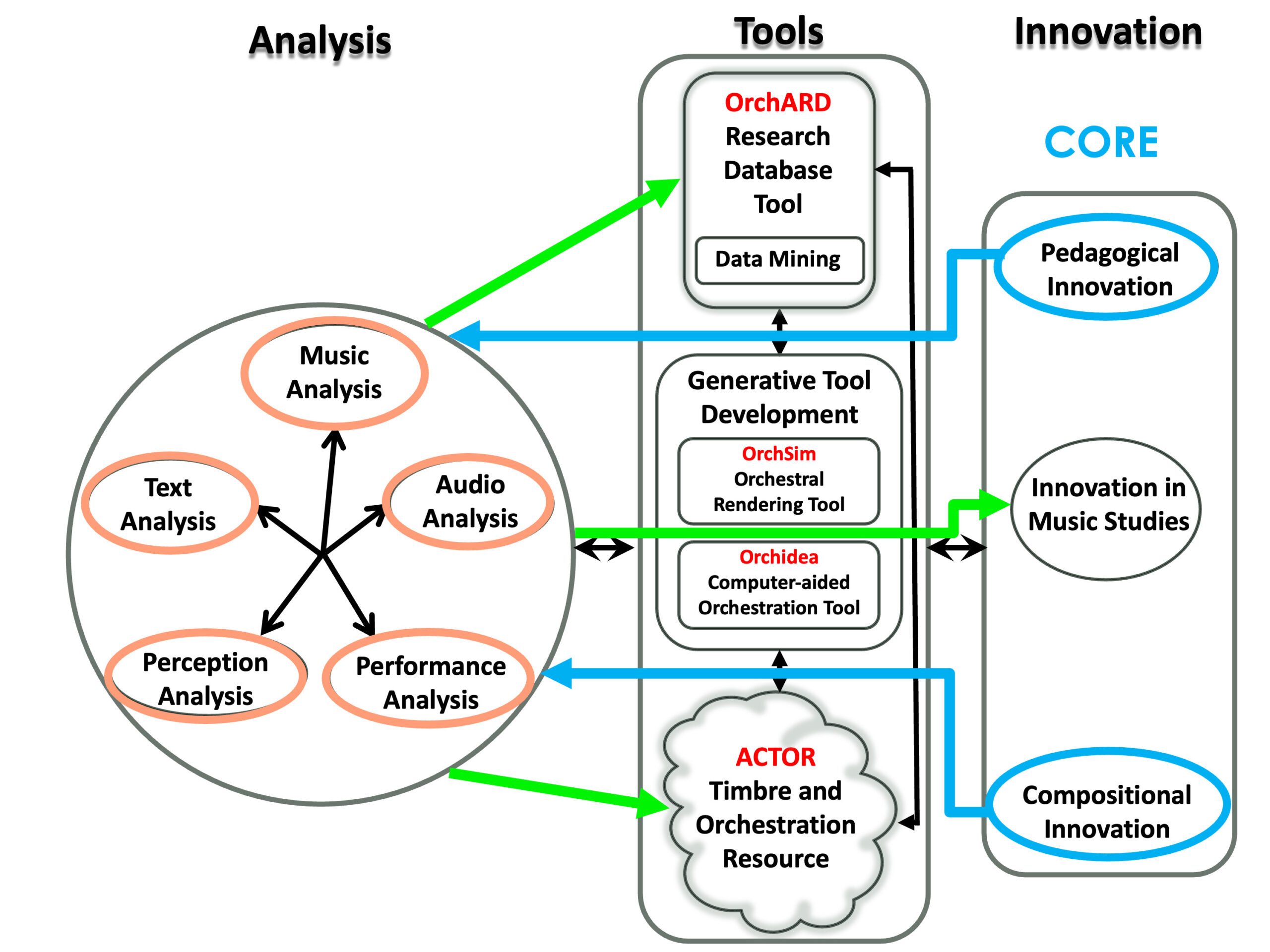
Figure 1: The role of the CORE Project within the ACTOR Partnership.
The perceptual results of orchestration are highly dependent on several factors: how musicians interpret and realize the score, the spatial positioning of instruments, and the acoustics of the space in which the music is heard. Musicians adjust relative levels, intonation, timing, and the timbre of their instruments to achieve or avoid blending together, to enhance or minimize distinction between different musical lines, to move seamlessly from instrument to instrument, or to reinforce or diminish contrasts, depending on the musical context. Performance is thus at the heart of orchestration as a practice.
Accordingly, the primary goals of the CORE Project were:
- to integrate knowledge from the science of music perception and cognition into the creative process through presentations of key concepts and terminology;
- to create an environment for collaboration between performers and composers in imagining and realizing orchestration with ensembles that present orchestrational challenges;
- to provide an interactive forum for performers and composers to test their ideas about orchestration and, through collective feedback, to evaluate their efficacy and make necessary adjustments; and
- to integrate the collaborative, scientific and idea-testing approach as pedagogical innovation in orchestration teaching for contemporary performers and composers.
The intellectual and artistic contributions of performers, conductors, composers, and producers are essential to improving research on orchestration. The CORE Project sought to engage performers and composers in developing new knowledge and practice. Therefore, it situated itself within a framework of creation-as-research. From this perspective, creation is not just an object or tool for research, but a research modality in its own right (Chapman and Sawchuck 2012). The ACTOR partnership developed CORE as a research-creation project with a strong pedagogical emphasis centred on the integration of the science of perception and cognition into the process as well as an intense and prolonged collaboration between student composers, performers, and, in some cases, conductors, music theorists, analysts, musicologists, and sound recordists. The students were encouraged to imagine and interactively explore the orchestration possibilities within a fixed and timbrally heterogeneous instrumentation, and to participate actively and collaboratively in the creation of études in the form of short pieces. The project represents an innovation in music pedagogy in the sense that performers and composers usually train and operate separately, focusing on their specific disciplinary craft and skills. Traditionally, composers write music and players perform it. However, the CORE Project sought to weaken this hierarchy by including both groups (composers and performers) in a collaborative process of co-creation (to varying degrees depending on the institution; see Bourgogne in this issue). CORE also sought to inject knowledge from the sciences into the research-creation framework by introducing the participants to scientific concepts from perception and cognition research related to timbre and orchestration.
The main part of the project took place in three rounds, first with a heterogeneous quartet of violin, bass clarinet, trombone, and vibraphone plus small percussion instruments, then with a septet adding cello, flute, and piano, and finally the septet or quartet plus electronics.1A fourth round took place at the Haute école de musique de Genève, Université de Montréal, and University of British Columbia. At the HEM, the septet plus electronics was employed. At UBC and UdeM, no constraints were placed on instrumentation. At UBC, the ensemble was a quartet comprised of soprano, oboe, cello, and percussion. At the Université de Montréal, several non-Western instruments were included, and the eleven pieces ranged from solo instrument with electronics to small ensemble. However, this article will focus on the first three rounds with fixed instrumentation, as neither of the authors participated in that fourth round. The pedagogical aims included exposing the students to issues of orchestration practice through the lenses of composition and instrumental techniques, as well as through the role of perception and cognition in the reception of orchestral effects by listeners. An important aspect related to the focus on perception and cognition in the CORE Project was the attempt to avoid dead-ends and wastefully impractical experimentation. For example, the extreme rhythmic complexity in music by some contemporary composers might be considered perceptually misguided, although some might aim for surpassing perception norms as an esthetic goal. Such practices have led, as have other extreme behaviours, to orienting younger composers to seek “individuality” in their compositional practices, but in ways that defy psychologically based knowledge on the limits of pattern and form perception at many levels of musical structure (see e.g., McAdams 1989). We consider the optimization of innovation through sensitization to relevant psychological issues to be a crucial outcome of CORE. By considering certain basic perceptual and cognitive characteristics of the human organism, particularly as they relate to orchestration practice, one can focus on the possible rather than wrestling with the improbable or impossible.
This article will first present the multi-institutional organization of the CORE Project over the seven-year span of the ACTOR Partnership. The approach adopted (depending on the institution) involved presenting scientific and musical research and concepts related to timbre and orchestration perception, developing a standardized vocabulary derived from that research, and using the resulting concepts to analyze orchestration practice in reference pieces from existing repertoire (widely admired works or previous CORE pieces in one case). The impact of this approach is evaluated through interviews with participating musicians. The article will then address one of the main aims of the CORE Project, which was to inject scientific knowledge into orchestration conception and realization as a way of illuminating and enhancing musical creativity. This strategy is evaluated through targeted interviews with three participating student composers conducted and commented on by the second author.
The timeline of the CORE Project
One aim of the project was to collect recordings of all pieces under recording conditions that were as similar as possible across institutions. To this end, Tonmeister Martha de Francisco of McGill University collaborated with a team at the University of California San Diego (UC San Diego), to refine the placement and orientation of microphones for the original quartet, in March 2019. The team involved Roger Reynolds, Rand Steiger, Miller Puckette, Mike Butler, and Andrés Gutiérrez Martínez. The microphone configuration was tested in three different performance spaces with études composed by Roger Reynolds. De Francisco subsequently adjusted this configuration for the quartet with increased spacing during the COVID pandemic and then with Ying-Ying Zhang and Yangwanqing (Viola) Zhou at McGill for the septet in 2022 using études composed by Erin Graham and Sang Song from UC San Diego.
The initial pilot run of CORE with the quartet was conducted in 2018-2019 at the University of British Columbia (UBC), led by Keith Hamel and Bob Pritchard in collaboration with Paolo Bortolussi, the conductor of the UBC Contemporary Players Ensemble. A report on the process was presented by Hamel to the CORE Workgroup at the ACTOR Year 1 Workshop in Paris. The workgroup members listened to the two pieces and discussed the solutions adopted and the challenges encountered, agreeing that the process admirably matched what had been set out and hoped for at the ACTOR Kickoff Workshop in 2018 in Montreal. This approach was then repeated in a first round at the four other participating universities in 2019–2020:2A documentary focusing on Round 1 at McGill and UdeM is available in Thibodeau (2021).
- McGill (led by Guillaume Bourgogne and Stephen McAdams),
- Université de Montréal (UdeM, led by Caroline Traube, Pierre Michaud, and Jean-Michaël Lavoie),
- UC San Diego (led by Roger Reynolds and Rand Steiger), and
- University of Toronto (UofT, led by Eliot Britton).
Studio recordings were completed at UC San Diego, and a reading session was recorded at UofT. The final realizations in concerts were not possible at McGill and UdeM due to the pandemic, which shut down the universities concerned in mid-March 2020. However, the pieces were subsequently recorded at McGill in May 2021 and at UdeM in October 2021. They were then finally performed in concert in November 2021 at UdeM and in April 2022 at McGill. The second round with a septet took place in 2021-2022 at McGill, UBC, UC San Diego, UdeM (now with Jimmie LeBlanc), as well as at the Haute école de musique de Genève (HEM) in 2022-2023 (led by Gilbert Nouno, Luis Naón, and Michael Jarrell). The third round with septet and electronics occurred in 2023-2024 at UBC, UC San Diego, UdeM, and HEM. McGill joined the third round with the original quartet plus electronics in 2024-2025 (with Stephen McAdams, Andrés Gutiérrez Martínez, Charles-Eric Fontaine, Louis-Michel Tougas, and Joshua Rosner). In total, twenty-two works were created and recorded in Round 1, thirteen in Round 2, and sixteen in Round 3.
Different pedagogical approaches
Different pedagogical approaches were adopted for the CORE Project across the six participating institutions, depending on course structure possibilities and resource availability. Some were formal seminars (McGill, UC San Diego, UdeM), and others were more project-based (HEM, UBC, UofT). The integration of performers throughout the process primarily occurred at HEM, McGill, and UdeM. To focus participants’ attention on issues of perception and cognition in the reception of orchestration by listeners, initial topics of research on timbre and orchestration perception, timbre semantics, and aural sonology were presented to varying degrees at the different partner institutions. Out of this work, an attempt was made at some institutions to extract and develop a standardized vocabulary of perceptual, cognitive, and evaluative effects, although it also happened implicitly at other institutions through the use of introductory material on these topics. This orientation was then made concrete in the minds of participants at UC San Diego and McGill through the analysis of orchestration in several reference works with a specific focus on the terms and concepts previously presented. In some institutions, participants were asked to present “seed ideas” of a compositional or performative nature to give a full voice to composers, performers, and conductors and to develop discussion of where they thought the project could go, to be examined later in terms of what actually transpired. This approach allowed for a healthy accountability within which initial intentions were evaluated as they pertained to musical outcomes in an interactive process made possible by the continual interaction over time among the musicians. An archive of video interviews, sketches and scores, audiovisual recordings of workshops, rehearsals, concerts, reports, and other documentation was also created at several institutions. Through transcriptions of interviews and recordings of workshop sessions and rehearsals, text-based analyses were conducted on the types of interactions among performers and composers and on the evolution of participants’ thinking about orchestration with the designated instrumentation (Maillard et al. 2021). Figure 2 lists the activities included at each institution. All the materials collected during CORE workshop sessions were archived within the ACTOR data repository for future reference and analysis.
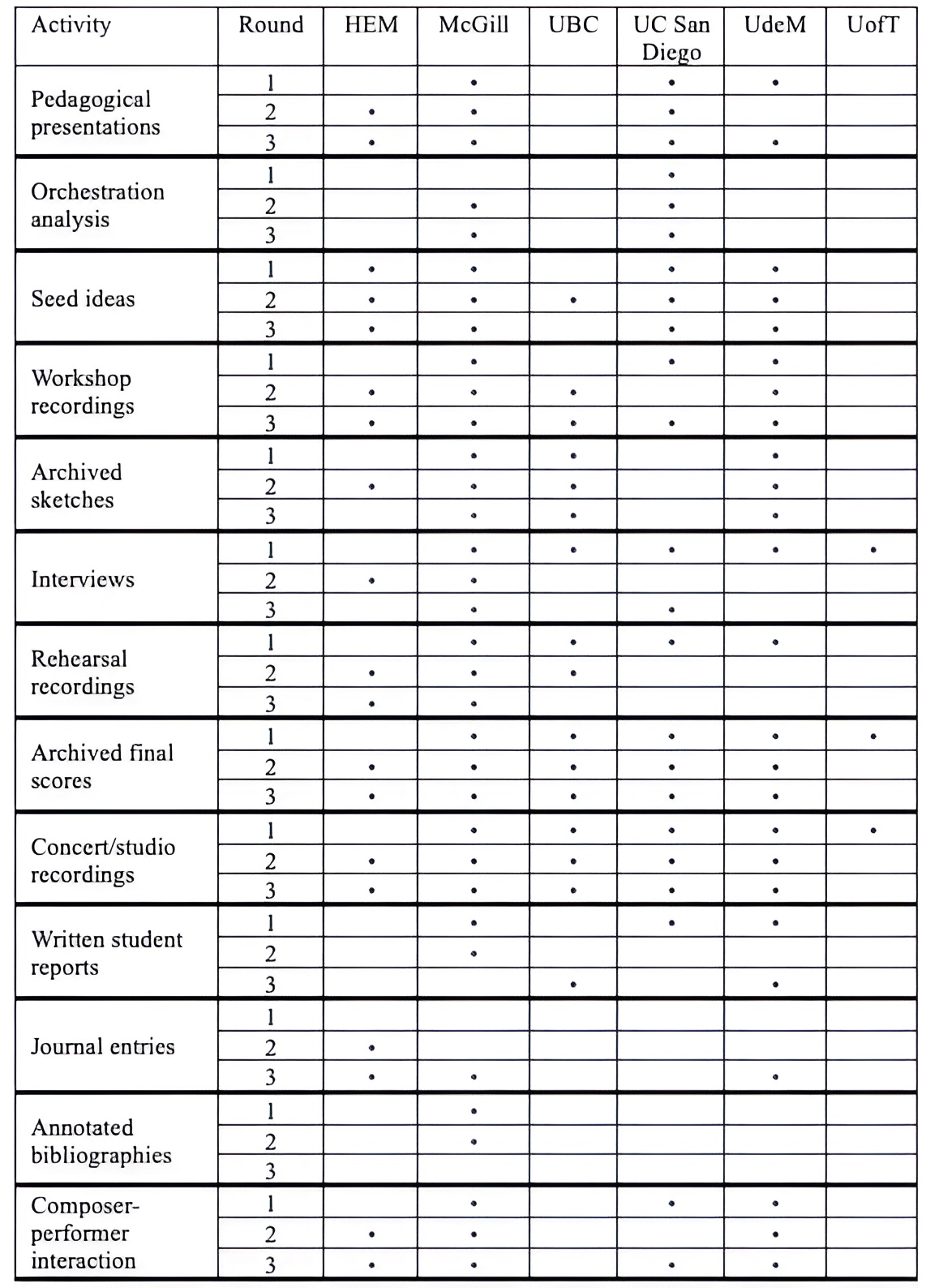
Figure 2: Activities included in CORE at each institution for the three rounds.
Introductory presentation of timbre and orchestration research
At three institutions (McGill, UC San Diego, UdeM), the ACTOR Partnership aims were presented and sessions were dedicated to timbre and orchestration perception to bring focus to what listeners experience through orchestration (see McAdams 2019a, 2019b). Perception of basic auditory attributes such as pitch, loudness, timbre, and spatial position was outlined in terms of the acoustic properties that give rise to these perceptual dimensions. One important distinction presented was between masking (the annihilation of one sound by another) and fusion (the blending of two or more sounds into a new percept). This distinction is important in orchestration, because although one might not be able to separately hear out a particular instrument, it is still contributing to timbral quality through fusion if the sonority changes when it is removed. However, if a listener hears no difference when the sound is removed, then it was masked. Given that orchestration controls what one hears in timbral terms, emphasis was placed on the multidimensional character of timbre and the various acoustic properties that affect it, such as the temporal envelope, the spectral shape, and how this spectral shape evolves over time. It was also important to consider the many aspects of timbre that are under a performer’s control (chosen fingering, embouchure, the position, speed, and pressure of the bow, the plucking speed and angle, the point of contact of a mallet, extended techniques, etc.) or that arise through combined ensemble sounds depending on tuning, synchronization, and balance among instruments.
Attention was given to the way listeners describe the timbral properties of sounds with words or categorize and notate sound properties for analysis. Timbre semantics studies the way people verbally describe perceived sound properties and orchestral textures, and how those descriptions relate to acoustic properties of sounds (Reymore 2022; Reymore and Huron 2020; Reymore et al. 2023; Traube and Depalle 2004; Wallmark 2019; Wallmark and Kendall 2021). Aural sonology had been developed by Lasse Thoresen from Pierre Schaeffer’s objets sonores concept to define various categories of sound properties and develop a related notation system that can be applied to music-as-heard, including acoustic and/or electroacoustic sound sources (Thoresen and Hedman 2015).
At the level of orchestration per se, the Taxonomy of Orchestral Grouping Effects (TOGE) defines several perceptual phenomena categorized under concurrent, sequential, and segmental grouping that play a role in how orchestration decisions structure form through timbre and other musical parameters (Goodchild and McAdams 2021; McAdams, Goodchild and Soden 2022). Concurrent grouping principles of onset synchrony, harmonicity, and parallel change in pitch and dynamics play a role in whether instruments playing simultaneously blend or not. However, the degree to which frequency spectra and temporal envelopes overlap between simultaneously presented instrumental sounds also plays a strong role in blend, in the sense that sounds with timbres resulting from similar spectral and temporal properties tend to blend better. Sequential grouping principles of continuity in pitch, timbre, loudness, and spatial position in a succession of events determines whether they are mentally connected into a coherent sequence, called an auditory stream (Bregman 1990; McAdams and Bregman 1979). Continuities lead to the integration of events into a stream, and discontinuities lead to the segregation of events into two or more streams (which are each integrated). Segmental grouping principles underly orchestral contrasts of material at moments where discontinuities occur in various auditory properties, creating boundaries that distinguish musical patterns and sections from one another. These concepts have been applied to the orchestration analysis of a piece by Roger Reynolds, The Angel of Death, in a chapter by Touizrar and McAdams (2019) and of a piece by Germaine Tailleferre, Ballade for piano and orchestra, by Roth and McAdams (2026). From these various perceptual and semantic considerations, a standardized vocabulary with definitions was proposed.
Standardized vocabulary of perceptual effects
Drawing from work by Stephen McAdams in the realm of timbre perception and auditory scene analysis as applied to orchestration perception (Goodchild and McAdams 2021; McAdams 2019a, 2019b; McAdams, Goodchild and Soden 2022) and of Zachary Wallmark in the realm of timbre semantics derived from orchestration treatises (Wallmark 2019; Wallmark and Kendall 2021; see also Traube and Depalle 2004; Reymore, Noble, Saitis, Traube and Wallmark 2023), the definitions of a basic lexicon of terms was collectively adopted in collaboration with Wallmark and McAdams, and was then evaluated and revised by the UC San Diego participants in a seminar led by Roger Reynolds the year following Round 1 (2020-2021). The participants also proposed musical examples illustrating each term. The lexicon was discussed and modifications were suggested by the team at McGill. The resulting document was subsequently made available to the other institutions and was used to varying degrees in CORE seminars to propose a shared vocabulary for discussion among performers, composers, and researchers. Many of the terms found their way into the Timbre Lingo entries on the ACTOR Partnership’s Timbre and Orchestration Resource. The lexicon terms were organized into three themes: perceptual terminology concerning local phenomena that underlie the character of musical sound, cognitive terminology concerning larger-scale phenomena that contribute to the perceived structure of music, and evaluative terminology concerning how local phenomena in music can be verbally characterized by perceivers (Reynolds et al. 2021). Figure 3 presents the list of terms with brief definitions. The full document by UCSD with commentary by McGill is available in Figure 3.
Perceptual Terminology: concerning the local phenomena that underlie the character of musical sound.
Timbral blending: occurs when the individual timbral identities of two or more sound sources appear less demarcated, blurred or even obscured as a result of such multiple sources sounding simultaneously.
Timbral augmentation: occurs when two or more timbres are partially blended and when a hierarchical relationship is drawn between the timbres, such that secondary timbre(s) are understood to embellish, highlight or reinforce primary timbre(s).
Timbral resonance: a case of timbral augmentation in which, after the primarytimbre(s) are no longer perceptible, the secondary timbre(s) remain perceptible.
Timbral emergence: occurs when there is a fully blended (fused) timbral combination, whose fusion results in a strikingly novel timbral complex that transcends the constituent timbral identities.
Klangfarbenmelodie: occurs when timbre changes by step in a manner akin to constructing a melody by successive pitch changes.
Masking: occurs when one sound inhibits, whether partially or fully, the clear perception of another. This can take the form of obscuring, distracting or altering perceptions and can result from loudness differences, textural contrasts, or temporal proximity.
Cognitive Terminology: concerning larger-scale phenomena that contribute to the perceived structure of music.
Event: a sonic occurrence that can encompass any of the ensuing timbral phenomena.
Surface texture: a collection of interwoven instrumental parts from which it is difficult to perceive individual components. These components cohere into a complex grouping in which it is clear that there is more than one instrument playing, but one tends to focus on the grouping and its emergent distinctive properties.
Stratification: Formation of layers with a single sound source or groups of blended or associated sound sources, and which incorporate changes of its constituent elements linearly over time.
Layer: a layer tends to behave in such a way that its components are perceived as belonging together and are consequently less identifiable separately.
Layering: stratification involves looser groupings of events into strata of different prominence or proximity (e.g., foreground, middleground, background). Individual stratified layers can include several instruments that are not fused, but which group together by contrast with materials being played in other layers.
Grouping: perceptual effects of orchestration practice based on principles of auditory grouping.
Concurrent grouping: concerns the integration of the acoustic information present in each of multiple, ongoing, and concurrently occurring sound sources. This phenomenon is responsible for auditory event formation.
Sequential grouping: involves the grouping of similar sources that occur sequentially over time into auditory streams. These are perceived as separate from other stream groupings also occurring sequentially over the same time span.
Segmental grouping: segmentation into perceptual units occurs when discrete changes occur to sequential groupings in one or more ongoing musical dimensions; in particular for example, sudden changes in instrumentation or electroacoustic sound create perceptual contrasts that delineate sets of different segments in succession, each with their individual identities.
Auditory scene analysis: the set of perceptual processes by which a sound world is organized into events, sequences of events (streams, surface textures), layers of differing degrees of perceptual prominence, and segmented units of various temporal scales.
Evaluative Terminology (Timbre Terms): concepts that combine temporal and spectral profiles with perceptual correlates, as captured with the most commonly employed semantic labels.
Brightness (bright/dark): The degree to which a sound’s spectrum favours high frequencies, strongly correlated with the position of the spectral centroid. Perceptually, it could include (at the bright end) brilliant, edgy, nasal, metallic; (at the dark end) dull, covered, rich, sonorous.
Spectral centroid (acoustic measure related to spectral locus): the “center of gravity” in terms of a sound’s frequency spectrum (a higher centroid implies a brighter sound).
Roughness (rough/smooth): The degree of sensory dissonance in a sound; related to harmonicity/inharmonicity. Perceptually, it could include (at the rough end) graininess, noisiness, wobbliness, shimmer, etc.
Richness (rich/limited): the fullness of the sound. Consider the number of partials meaningfully present in the spectrum: normal (ordinario) bowing on a string produces a greater number of partials and richer sound compared to playing near the bridge (sul ponticello) which privileges higher partials and a limited, fragile sound; a smaller number of partials (e.g. bowed vibraphone, string harmonics) produces a simpler, thin, pure sound; spectrally limited timbres are often associated with muting techniques.
Focus (focused/diffuse): the “peakiness” of the spectrum around a particular frequency/partial or characterizing the spread of frequencies across the spectrum. A more focused sound will have a cluster of intensity around a single frequency, while a more diffuse sound will have a spectrum that is flatter and less peaky.
Tonal volume (large/small): the perceived “size” of the sound, i.e., a sound can seem fatter or more voluminous as produced by one instrument in contrast to the same pitch and register produced on another.
Figure 3: Lexicon of terms on timbre and orchestration developed by the UC San Diego team and vetted by the McGill team. See the PDF version of the text of the developed vocabulary with explanations and musical examples.
Orchestration analysis
An activity initially implemented at UC San Diego involved using the developed perceptual and cognitive concepts and vocabulary to analyze the orchestration in reference works by renowned composers or other CORE pieces. Students in seminar-based CORE activities were asked to analyze the pieces aurally through the lens of specific perceptual concepts, with the express aim of making them concrete through examination of existing music, while referencing a particular recording. The UC San Diego pieces analyzed in Round 1 included Arnold Schoenberg, Five Pieces for Orchestra, op. 16, III, “Farben”; Anton Webern, Six Pieces for Orchestra, op. 6a, I; Igor Stravinsky, Three Pieces for String Quartet and Quatre Études pour orchestra; Olivier Messiaen, Quartet for the End of Time, VI; Edgar Varèse, Intégrales; Kaija Saariaho, Orion; and Sofia Gubaidulina, Offertorium. At McGill, students analyzed pieces in terms of the perceptual, compositional, and performance issues presented in the Introductory phase. In Round 2, the pieces were Orion, II, “Winter Sky” by Kaija Saariaho and the Kammerkonzert I and II by György Ligeti; each was analyzed by three groups of students in two separate sessions for the two pieces, each with two different reference recordings, to examine differences in realization due to performance nuances. In Round 3 at McGill, pieces were chosen from other CORE works: two from Round 1 (quartet)—Felipe Rossi (UC San Diego), Per Mutare and Alex Blank (McGill), Flow—and two from Round 3 (septet plus electronics)—Julian Franco (UBC), Zodiacal Light and Simon Gregorcic (UdeM), Accords secrets. Two groups of students each analyzed one Round 1 piece and one Round 3 piece. The analysis process was crucial in giving musical meaning to, and demonstrating relations among, the concepts by applying them to specific pieces of music and working collaboratively to understand where and how they are relevant to the composers’ orchestration practices.
An illustrative example is the analysis, by one group in Round 2 at McGill, of a passage near the beginning of the Saariaho piece (mm. 11–36) in terms of overlapping effects of timbral blend, timbral resonance, and textural support. It is clear through this exercise that the concepts move beyond their abstract nature to become embodied in actual musical examples.
In mm. 11–12, the violin takes over from the piccolo line by starting the line as the piccolo finishes, although the instruments still stand apart, perhaps due to the inherent difference in timbre between the instruments. When the violin enters, the lowest harmonic of the piccolo is emphasized. In both cases, the percussion is accentuating the prominent beats and the entries of the instruments, even though it appears as though Saariaho is trying to mask the change of instruments by overlapping timbres. In the case of the clarinet (entering m. 17), the strings from violin down to cello also change note or enter on that beat, further marking that change. The violin and percussion in effect augment the piccolo as the violin starts its solo, and the clarinet is augmented by strings and percussion as it starts its own contribution. At the same time, contrabassoon and bassoon enter for the first time (m. 19) adding an overlapping component. In a similar fashion to the example in mm. 11–12, the oboe matches the clarinet and takes over from it (m. 26). Finally, we get a true timbral emergence with the instruments (easier to achieve in instruments of the same family in a high tessitura). Because the oboe starts at a much softer dynamic and the blend is so strong, we don’t notice it until one bar later (Timbral Resonance). As before, in mm. 33 onward, Saariaho achieves an admirable blend as one instrument’s solo ends and another one’s begins. The perceived brightness of both the oboe and the muted trumpet make their timbres come together more easily. Once again, the pp entry of the trumpet creates a timbral resonance in which we are not aware of its presence until the oboe begins to fade away. (Group 2, CORE Round 2 interview at McGill 2021)
It is instructive to recount some of the individual responses of representative participating students to this approach of introducing concepts and vocabulary. Responses to a question oriented in this direction below are from CORE 2 students at McGill (see also Wantuch in this issue).
Alex Huyghebaert (flute):
Individually learning about the terms and concepts gave me more responsibility, but in a way, it also gave me more authority and confidence. It felt like I could look at any part I had, and I had so much more knowledge on what the composer might be asking me to do and why. Learning the terms, I’ve been able to identify certain timbral effects in other music that I’m playing. It allowed me to better see composers’ reasoning for orchestrating in a specific way and then make better informed performance decisions for myself. So, it really gave me a lot of responsibility but also got me to take a step back and just fit where I need to fit to achieve a certain ensemble sound. I understood the reason, and I could then write on my score “timbral resonance,” and then I could fade in or fade out or I could recall times when I’ve heard that effectively done in another recording or another piece and then use that imagery to help me recreate that. (Huyghebaert, CORE Round 2 interview at McGill 2022)
Louis-Michel Tougas (composer):
For most of these terms, I feel that your experience in composition gives you an intuition for all these issues. The challenges of auditory streams, for example: when you do counterpoint, you try to make the lines independent. But here, really studying the terms, then the psychoacoustic reasons for the effect of auditory streams or the effect of perceptual fusion or segregation, means that we have clearer ideas afterwards for composition. It also means that I have more theoretical and acoustic tools to try to achieve that result. We go a little beyond the stage of compositional intuition, which says that if the registers are distinct, we know that segregation is more likely. But knowing that there are other issues of synchronization of attacks or equal amplitude, that kind of thing still contributes to the richness of the possibilities of compositional writing.3Translated by the author from the following original text: “Pour la plupart de ces termes, j’ai l’impression que l’expérience de la composition vous donne une intuition de toutes ces problématiques. Les enjeux de courants auditifs, par exemple : quand on fait du contrepoint, on essaie de faire en sorte que les lignes soient indépendantes. Mais là, de vraiment étudier les termes, puis les raisons psychoacoustiques de l’effet de courants auditifs ou de l’effet de fusion ou de ségrégation perceptive fait en sorte qu’on a des idées plus claires après ça, pour la composition. Ça fait en sorte aussi que j’ai plus d’outils théoriques, acoustiques, pour essayer … Continue reading (Tougas, CORE Round 2 interview at McGill 2022; see also Tougas in this issue)
Alexander Ortins (bass clarinet):
I think the introduction phase, in particular, was very mind-opening in the sense that timbre is not something that you often think about. It’s not something that’s often discussed, especially in rehearsals. So I really appreciated those early courses, with a lecture about terms, and then our analyses of pieces. I’m not sure how much I was able to translate it in my own music making, but it is something that’s in the back of my mind and that I can come to and think about when I listen to music, which I do appreciate. (Ortins, CORE Round 2 interview at McGill 2022)
Micah Kroeker (trombone):
I think it was important that we started here and gained that knowledge. I believe it ended up guiding that creative process throughout, even though at this point no one is really specifically asking for or talking about punctuated emergent blends or augmented vibraphone strokes. These technical phrases have kind of left the vocabulary in our preparing of the pieces. But sometimes the composer would get an idea for something they wanted, and it might be clear in their heads, but to translate it into something that our group of fixed instruments could represent wasn’t always straightforward. However, knowing that everyone was previously steeped in the terms and concepts discussed at the beginning of the course, we could walk into a session and verbalize some timbral idea or process, and there was more unity in trying to create that result. It was up to everyone to troubleshoot and find the right means with our specific seven instruments. So, although I think the use of the technical jargon was limited to the first phases, sometimes having the language can guide our understanding and meaning anyways. (Kroeker, CORE Round 2 interview at McGill 2022)
Seed ideas
The notion of seed ideas was born of an approach that had been used by Roger Reynolds in his graduate composition seminars at UC San Diego preceding ACTOR. Composers were invited to propose their ideas for pieces and how they believed they would be perceived by listeners. The other participants in the seminar served as those listeners and provided feedback as the pieces were developed. The primary aim was to get musicians to reflect on what they believed in terms of the reception of their work, but also to have those beliefs tested by other listeners. This concept was adopted and extended in the CORE Project to both composers and performers in all participating institutions. In addition to composers presenting their aims and beliefs about how those aims would be received in their music, performers were asked to propose to composers creative uses of their instruments in combination with other instruments, as well as ideas for musical resources from which composers could subsequently draw. This occurred either individually or evolved through group improvisations to address possibilities of ensemble orchestration. In some institutions, the group improvisations were the springboard for subsequent compositional ideas.
Composer-performer interactivity
One of the key aims of CORE was to establish a fertile ground for co-creative interaction between composers and performers, attempting, to the extent possible, to break down the hierarchy by which composers provide scores that performers must then interpret and realize. The nature of the pedagogical structures in several of the partner institutions did not allow for this to occur throughout the year. However, a strong collaborative scenario was established at HEM, McGill, and UdeM, in which the performers and composers (and in some cases student conductors and musicologists) were present throughout and collaborated regularly inside and outside of scheduled class sessions.
At the annual ACTOR summer workshop held online in July 2020, several participating students reported on their reactions to the CORE approach. From the perspectives of some of the performers participating in CORE 1, as presented at the CORE workgroup of the ACTOR Annual Workshop in July 2020 (Jeanne Côté, McGill; Berk Schneider and Peter Ko, UC San Diego), the social mediation of perceptions through establishing a vocabulary for communication allowed for the bidirectional transfer of ideas between performers and composers (McAdams, Reynolds and Traube 2020). They noted that communication was imprecise at first but improved with time and the terminology learned. The lexicon previously referred to was helpful for discussing existing works and works in preparation, and the ideas and concepts acquired helped define the performers’ agency in interpretation. They did often feel, however, that their agency as researchers and their level of input could be increased. This would require all sides to participate in breaking down what were felt to be the less desirable features of traditional performer-composer relationships. There was generally a positive experience of exchange, although some performers felt their contributions were attenuated in the final versions of the scores. In any case, the composers were often clearly influenced by the performers’ input throughout the process. Indeed, it was decided collectively by the CORE workgroup that composers should list the performers who participated in this research-creation process in their scores in recognition of their creative contribution.
From the composers’ perspectives (Pedram Diba and Quentin Lauvray, McGill; Sang Song and Tiange Zhou, UC San Diego; Eliazer Kramer and Joshua Bucchi, UdeM), the scenario with its built-in constraints was challenging, but opened new avenues of exploration. McGill composers, for example, noted that weekly feedback allowed for more adventurous risks. One composer noted that the imposed instrumentation provided a unique chance to work directly with the ensemble as a single unit. The composers also generally agreed that the development of communications was aided by the standardized terminology, although some suggested that perhaps open exploration could also happen before terms and concepts are introduced to see what emerges first. Along these lines, several institutions employed group improvisation as a tool for the generation of ideas for sounds and sound combinations that were proposed by performers. The composers appreciated the presentations of possibilities of the instruments by performers in institutions where this occurred, and of particular note was continuing feedback from performers during the compositional process about improving and coordinating notational practice, particularly for extended instrumental techniques. Overall, learning and working both with performers and with other composers in the sessions helped with verbalizing ideas and overcoming initial personal biases in approach.
Analyses of interviews4Ethics Certification: Interviews cited with McGill participants were conducted under McGill University Research Ethics Board II certificate #201-1114. Participants consented to being quoted, and composers and performers gave permission for workshop sessions and concerts to be video recorded. All pieces presented on the ACTOR YouTube channel were done so with the permission of the composers and performers.
Structured interviews were conducted in Round 1 at McGill, UBC, UC San Diego, UdeM, and UofT, in Round 2 at HEM and McGill, and in Round 3 at McGill and UC San Diego. In initial interviews conducted after the introductory phase at McGill and UdeM, composers and performers expressed their aims and aspirations for the project. In final interviews (at HEM, McGill, UBC, UC San Diego, and UofT), they reflected on how the interactive process affected their work and conception of orchestration practice, with a focus on how this approach influenced the evolution of their perspectives over the course of the project.
The primary research issues addressed by the analysis of these interviews were: 1) composers’ and performers’ conceptions of the sound and music parameters and perceptual factors associated with timbre and orchestration for the specified instrumentation, and 2) their vision of the collaborative process between composers and performers (Maillard 2020; Maillard, Traube, Reymore and McAdams 2021).
Initial interviews
The questions posed in initial interviews were oriented toward revealing:
- conceptions of timbre as created and structured through orchestration,
- the opportunities and challenges posed by the specified, heterogeneous ensemble, particularly as concerns achieving or avoiding blends and the seamless connection of instruments in musical passages, or employing contrasts for structuring purposes, and
- conceptions of the nature of the interaction between composers and performers.
In terms of sound and music parameters in analyses of Round 1 interviews with the members of the quartet, the most addressed topics included timbre, extended techniques, timbral “territories”, blend, and spectral continuity. Unsurprisingly, the trombone is often mentioned in terms of imbalances in loudness and register. The vibraphone was frequently noted as providing spectral continuity with other instruments and was strongly associated with blend and timbral homogeneity. In connection with the fragmentation of musical discourse, the themes of extended techniques and contrast were often raised. These themes were addressed simultaneously, particularly when seeking to create a break in a musical phrase or in a sustained note itself. Extended techniques were said to be a good way to create strong timbral contrasts that would achieve these ends. Extended techniques were also often mentioned in combination with timbral territories, blend, spectral continuity, and contrast.
Another interesting result is that the violin and trombone were often mentioned together as a problematic combination. Given that the trombone is often associated with loudness imbalances, this association can be assumed to be a contributing vector to the difficulties experienced in that instrument duo. Indeed, the fear expressed was that the loudness level of the trombone as well as the significant difference in register between the violin and the trombone would contribute to a poor sound balance, where the violin could disappear. Imitation seemed to be key to achieving blend. For performers, getting as close as possible to the instrumental timbre of the other instruments was one of the most effective ways to blend their sounds (Lembke and McAdams 2015; Sandell 1995). Over the course of the rehearsals, each instrumentalist developed their own techniques for getting closer to the sound of the other instruments in the ensemble or to their instrumental characteristics. Cases in which combinations of this duo worked were achieved primarily in more integrated textures with several instruments or by approaching their respective timbres through extended techniques, such as light circular bowing on the violin with air sounds from the trombone, where the rustling and airiness combined well.
As for the vision of the collaborative project, the verbal responses dealt mainly with attitude toward the project, the challenges and opportunities, and the relationship between composers and performers. From a subjective analysis of this collaborative process, the composers seemed to benefit more from the collaboration than the performers. The composers greatly appreciated the immediate feedback from performers and being able to exchange with the performers and communicate their ideas clearly. Composers benefitted from the performers’ expertise with their instruments, and this seemed to help the creative process greatly. Performers suggested that this collaborative process helped them to feel heard and valued. In addition, this collective atmosphere led to the development of collaboration not only between composers and performers, but also amongst performers themselves, which in turn led to the exploration of possibilities on their own instrument, as well as between instruments.
Final interviews
Reflecting on the process, questions in the final interviews asked about:
- how the terms and concepts discussed at the beginning affected the creative process both individually and collectively,
- the perspective brought by viewpoints of composers, performers, and psychologists,
- issues regarding notation that arose,
- how various orchestration problems were resolved collectively, and
- how the process affected their way of listening in other contexts.
For our current purposes, we will focus on how the terms and concepts introduced at the beginning affected individual reflection and collective communication, and the role of the multi-stage approach adopted at McGill and UdeM where interviews were conducted systematically. The reflections of composers and performers will be presented separately.
1. Terms and concepts
Composers. The composers’ remarks revolved around how the study of perceptual functions in orchestration helped both them and the performers gain a clearer understanding of their intuitive practices. By providing a shared vocabulary, particularly from the TOGE (Taxonomy of Orchestral Grouping Effects, McAdams et al. 2022) and aural sonology (Thoresen and Hedman 2015), composers were able to articulate concepts they typically approached without specific words in mind. This vocabulary not only facilitated better communication between composers and performers but also encouraged composers to reflect on their own processes. While this framework was helpful, one participant felt that the introductory phase could have delved deeper into performance and composition issues, with an emphasis on inspiring creativity and expanding intellectual boundaries.
The importance of a common vocabulary in fostering collaboration was emphasized by several respondents. It helped ground participants in a shared understanding, although one participant felt that it focused attention too much on specific concepts rather than exploring new ideas. These remarks suggest that the shared terminology is essential, but could be accompanied by flexibility in thought for creative development.
The ability to describe sound quality and timbre was highlighted as an essential tool for composers. This vocabulary helped composers conceptualize and develop the sound they sought, enabling more precise communication with performers. By understanding auditory grouping processes, some composers gained new and explicit insights into orchestration as a means of musical structuring. The study of auditory organization principles, such as those related to timbral blends, auditory streams, and orchestral stratification provided composers with theoretical and acoustic tools to refine their intuition and enhance their compositional choices.
Performers. Performers noted that developing a strong perceptual vocabulary was essential for understanding and communicating about musical timbre, especially in interpreting composers’ notations. Discussions on timbral elements, such as brightness and darkness, proved valuable in shaping both problem-solving and realization phases in music-making. However, the introduction of aural sonology terminology was initially overwhelming for some, requiring more time for proper integration and application.
A key takeaway from these discussions was the recognition of how musical gestures involving two or more instruments contribute to sound production. By linking physical movement to sonic variation, performers gained a deeper awareness of how to shape timbre intentionally and consciously. The use of specific terminology provided a structured way to conceptualize these nuances, making it easier to communicate ideas among instrumentalists, with composers, and to those who were taking an analytic approach.
This learning process also shifted perspectives on orchestration and collaboration. Rather than focusing solely on individual instruments and their techniques, musicians were encouraged to think about sound holistically. This approach led to a shift in mindset, emphasizing the end sonic result rather than just the mechanics of playing. As a result, performers became more confident in identifying and reproducing specific timbres and textures collectively, making them more effective in ensemble settings.
Although not everyone fully adopted the terminology throughout the process, its underlying concepts influenced their approach to music (see Wantuch in this issue). Some found that it enhanced their ability to analyze orchestration, recognize timbral effects in various repertoires, and refine their communication with composers. Others noted that although their actual playing techniques remained unchanged, their listening skills and collaborative abilities improved.
Ultimately, the experience reinforced the importance of thinking about sound beyond traditional instrument-specific terms. Even when technical vocabulary faded from active use, the awareness it cultivated played a lasting role in shaping creative decisions, refining orchestration techniques, and improving musical collaboration.
2. Seminar structure
Composers. The seminar structure, particularly its introduction, exploration, and problem-solving phases at McGill and UdeM with variants at other participating institutions, played a significant role in shaping participants’ understanding of orchestration, collaboration, and musical problem-solving. Some composers felt the initial phases were engaging but somewhat ambiguous, suggesting that a clearer framework for exploration and problem identification could have made the process more efficient. Such tentatively questioning observations do, however, reveal the degree to which some students may have had an in-built resistance to examining their largely “intuitive” habits in fresh ways. Encouraging students to articulate orchestration challenges early on can provide clear direction in their search for solutions.
The extended exploration period helped composers both to develop their musical materials in relation to course content and test their ideas with performers, offering a model for future collaborative work. Although some composers found leading workshops on their sketches challenging, this phase provided them with valuable leadership development.
Integrating exploration into the introduction was seen as a potential way to reinforce learning by doing rather than by solely absorbing concepts. This hands-on approach could make the transition into the realization of seed ideas smoother, allowing participants to engage more freely with new material without being overly cautious.
Exploration was particularly valuable both for composers and performers. It provided an opportunity for composers to experiment, discover new instrumental possibilities, and refine ideas through direct interaction with performers. This iterative process—writing, testing, and adjusting—proved useful in honing orchestration, harmony, and timing, ultimately leading to a clearer articulation of musical intentions.
As the process unfolded, many composers moved from abstract or idealized thinking to a more direct engagement with sound material, gradually refining the instrumental techniques they were using. The early orchestration analysis sessions were particularly useful in applying perceptual principles to composition. Rather than focusing solely on individual techniques, the exploration and problem-solving phases emphasized the successful combination of specific instruments and techniques, fostering a deeper understanding of orchestration in the specific context of the chosen instrumentation.
The final realization phase involved rehearsals and refinements, marking a shift from traditional composition processes by incorporating extensive interaction with performers. This structured yet flexible sequence—from problem identification to solution refinement and final realization—offered a more linear and interactive approach to musical creation, reinforcing the value of collaboration in shaping artistic outcomes.
Performers. The seminar structure provided valuable insights into orchestration, collaboration, and instrumental possibilities. The introduction phase was essential in setting up the mindset of participants, fostering an understanding of timbral effects, and easing the transition into exploration. Some felt this phase could have been extended to deepen discussions on perceptual and cognitive issues related to timbre and orchestration. The initial learning process also highlighted the flexibility of timbral vocabulary, showing how different words evoke similar concepts, but also how language can be limiting in fully capturing musical ideas.
Exploration was a critical phase where performers and composers tested sonic possibilities and limitations. This phase allowed for open-ended experimentation, though some suggested that more freedom for performers to propose ideas or incorporate improvisatory elements could have enhanced the process. Creating rough drafts and having collaborative discussions helped refine ideas, but some musicians noted that adjustments proposed during exploration and problem-solving phases were not always reflected in revised scores, sometimes slowing progress. Standardizing notation practices within the cohort might have improved clarity and efficiency, particularly as concerns extended techniques.
The problem-solving phase proved valuable in addressing both individual instrumental challenges and ensemble-level orchestration concerns. The interactive nature of this phase allowed performers to expand their technical repertoire, particularly in extended techniques, while also giving composers direct feedback on practical constraints. Some found it beneficial to focus on resolving individual instrument issues outside the seminar, ensuring that class time remained centred on broader orchestration challenges at the level of the ensemble. Others noted that clearer explanations from composers regarding their timbral and orchestration decisions would have helped performers align their interpretations with composers’ intentions.
A recurring theme across the phases was the evolving role of timbre in composition and performance. While the seminar initially emphasized timbral vocabulary, many found that composers gradually shifted focus toward form and rhythm, sometimes leaving timbre more implicit. This raised questions about how timbral considerations are integrated into the composition process and how notation can sometimes be ambiguous in conveying intended sounds. Some participants suggested that expert performers familiar with extended techniques could have provided additional guidance early in the seminar, thereby enhancing the learning process.
It is clear from many of the performers who participated in the project that they felt a certain skepticism about the idea that such a collaborative project could completely dissolve the hierarchical dynamics between the two parties. Some performers felt that the exploratory nature of early phases was put aside when old habits kicked in for final phases in some programs (see articles by Wantuch and Bourgogne in this issue). At some level, it is not completely surprising that when the heat is on, so to speak, people retreat at least in part to familiar ways. It seemed clear to both composers and performers that in a collaborative context, it was a challenge to establish completely equal footing between the two parties. Nonetheless, the development of the project demonstrates that collaborative processes in music can have a real impact on the musical outcome of a piece: composers’ and performers’ perceptions of certain musical parameters and their sharing of them can influence the creative process. It is also clear that everyone benefitted from using each other’s expertise in the process. These reflections on collaboration also reveal the necessity of supporting and developing co-creation processes that take the performers’ view into account and value their creativity and contribution to the work and to orchestration-related problem solving, while ensuring that playing techniques are properly and efficiently notated in the score. An innovative approach to this perspective was adopted in Round 3 at UdeM, in which performers were asked to develop their own perspectives in the research-creation collaborative process: composers were asked to take the performers’ own research questions into account in their composition, so that the performers could concurrently pursue their own research goals. The perspective of analysts might also enter into an interactive dialogue with both performers and composers in a similar way. The CORE Project initially intended to include analysis as a collaborative dimension, but this aim was only rarely realized (see nonetheless articles by Adler, Hasegawa and Rosner, Galliker and Gregorcic, and Hérold and Nouno in this issue).
In some institutions, student conductors, musicologists, or music theorists were integrated into the process. Conductors formed part of the second and third rounds at McGill, and the third round at the HEM. One challenge in this was directly related to what conductors usually consider their role to be, and being just another participant in a collaborative activity rather than running the show was initially destabilizing for some. Only UdeM and HEM succeeded in integrating musicologists into their projects while they were occurring rather than after the fact, as seen in this issue in the articles by Galliker and Grégorcic and by Hérold and Nouno. Both institutions adopted a fruitful approach to tracking the creative process in this collaborative setting. At McGill, calls for music theory students for Round 3 went unanswered.
Overall, the seminar facilitated a dynamic and interactive approach to music-making, encouraging both structured learning and creative exploration. Whereas refinements in notation practices, instructional methods, and collaborative processes could enhance future iterations, the experience reinforced the importance of integrating perceptual awareness, instrumental possibilities, and collaborative problem-solving into composition and performance.
Given that one aim of the CORE Project was to inject knowledge from scientific research on perception and cognition into the creative process, we next consider the contribution of science to the artistic creative process, first in general terms through the lens of one author’s experience, and then through three case studies, interviewing composers on the role of scientific elements on their composition within the project.
How scientific disciplines can illuminate and improve innovative creative procedures
Two of the most significant innovators of the Twentieth Century were indelibly linked when American John Cage wrote memorably that German composer Karlheinz Stockhausen had once said to him, “I demand two things from a composer: invention and that he astonish me.” This resonated in the minds of young American students then, and the power of this asserted requirement is still present in the outlook of many younger composers. To put a possibly unfair spin on it, one could detect an implication here that to be “original” is preferable to being “musical”, at least according to convention.
The legendary Darmstadt Summer Courses formed a crucible of demand but offered little in the way of means by which one might seek sufficiently innovative ends as to be “astonishing.” Boulez on Music Today memorialized a set of lectures that he purportedly prepared in his hotel room before delivering them in Darmstadt in 1959 (Boulez 1963/1975). They brilliantly display his personal search for originality but are weakened by the distance of his actual procedures from perceptual realities. Notable creative initiatives did occur at that time, however. Stockhausen’s 1959 article “… how time passes” published in the influential publication, die Reihe, is an example that sought to rise above Boulez’s perceptual impracticalities in terms of its creative relevance. Some of Cage’s early writings were similarly accessible and potentially useful, especially as regards numbers and proportion.
Because the formal education of the present article’s second author began with an Engineering Physics degree from the University of Michigan, he was able to draw nourishment from disciplines and sources unlikely to have influenced his peers: George A. Miller’s (1956) writings about information theory, Paul Fraisse’s (1957) The Psychology of Time, Donald Norman’s (1968) Memory and Attention. These and other similarly extra-musical sources stimulated a sense of innovative horizons. Fred Lerdahl’s work with linguist Ray Jackendoff (1983) and Stephen McAdams’ (1989) seminal article in the Contemporary Music Review, “Psychological constraints on form-bearing dimensions in music,” opened tangible methodological doors.
The impact of ACTOR, and, in particular, the reorientation in outlook and creative practice that came about because of CORE, constitutes a direct parallel to the earlier extra-musical orientation and resources mentioned above. The opening of the potential relevance of scientific resources to innovative compositional and performative creation is a major legacy of the seven-year project.
The ACTOR Partnership was imagined as an exploration of traditional and newly available means for conceiving, realizing, and analyzing powerfully nuanced orchestration. It had creative and also pedagogical implications. Early discussions—influenced by SSHRC grant stipulations—included consideration of how graduate students at member institutions could be engaged. As explained elsewhere in this article, a sub-category of ACTOR’s activities included the CORE program. Under this umbrella, student composers, performers, and in some cases conductors and analysts from member institutions were initially given the opportunity to collaborate on the creation of short “timbre études” for heterogeneous (and deliberately problematic) ensembles of four or seven instruments without or with electronics.
One notices immediately that there are built-in limitations in this situation that would not normally constrain the creative work of a composer, experienced or not. And why were there such constraints? One reason was the potential utility of a substantial collection of musical statements that were closely aligned in regard to their generative premises and logistical nature. They would form a corpus of like instances and thereby could enable exploration by curious analysts (see articles by Adler, Hasegawa and Rosner, Galliker and Gregorcic, and Hérold and Nouno in this issue). Another criterion was the surmise that if work on a creative project were at least partially to occur within a thoughtfully principled space, it could more reliably lead to genuinely innovative outcomes (see articles by Garcia Vitoria, Kramer, Nešiċ, and Tougas in this issue).
Some among the ACTOR members were hesitant, even deeply skeptical regarding any sort of conditions being placed on the creative process, fearing that they could impinge on the sacrosanct domain of personal intuition. However, over several CORE cycles, each altering the boundary conditions in thoughtful ways, it became clear that the student composers involved produced quite credible and highly varied études or short compositions.
Three case studies will be discussed below in order to show how the presence of extra-musical conditions or premises, scientific or otherwise, resulted in unexpected and impressive freshness to compositional outcomes both in regard to the particular opportunity provided by CORE, but also over the long term.
Two of the composers discussed, Alex Stephenson and Tiange Zhou, participated in seminars taught at UC San Diego with Roger Reynolds and Rand Steiger. A third, Louis-Michel Tougas (see article in this issue), did his studies in Montréal at McGill with Stephen McAdams and Guillaume Bourgogne (see article in this issue). In each case and for the purposes of this article, they were each asked the following open-ended question:
What impact did the introduction to psychoacoustics, perception, cognition, and special vocabularies such as [those] we explored in the ACTOR-related seminars have on your compositional practice, both in the local assignment of creating an 8-minute “timbre étude” and also in the longer run.
Each was asked to be candid. And told that their bullet points could be very specific or more general in their content.
Alex Stephenson
1. Semantics
“Terminology”, in Stephenson’s words, was one of the issues to which he intended to bring attention:
In my experience, orchestration practice has traditionally been discussed using simple adjectives: … “clear,” “muddy,” “full,” “thin,” and so on. [Such adjectives] are helpful, but [I] see at least two limitations.
He goes on to observe that the value of terminological imprecision as a source of viable creative prompts is limited, and to note that the CORE vocabulary was intriguing particularly because of the specificity that constrained its scope.
Take, for example, “timbral augmentation”—who is augmenting whom? Under what conditions will instrument A be heard to augment instrument B? If conditions were different, could instrument B instead augment instrument A? What are those conditions and how might I adjust them over the course of a composition? In this way, the form of a potential new work begins to come into view.
2. Creation
Stephenson’s 2019 timbre étude explored the term “timbral modulation” (listen to recording and see score of Stephenson’s Data for the Study of Timbral Modulation in Media 1 and Figure 4). His understanding was that it was essentially a synonym for Schoenbergian Klangfarbenmelodie, in which timbres continually morph while pitches are relatively slow to change. In a UC San Diego seminar in 2017, McAdams introduced concepts in tandem with the notion of a three-dimensional timbre space within which any timbre can theoretically be located, the acoustic correlates of the perceptual dimensions being spectral centroid, attack time, and spectral flux. This revelation served as a significant creative prompt, suggesting a way to gently “modulate” a pitch or a chord smoothly through timbre space.
Media 1: Alex Stephenson’s recording of Data for the Study of Timbral Modulation (mm. 1–151). Listen to Media 1.
Figure 4: Alex Stephenson’s score of Data for the Study of Timbral Modulation (mm. 1–151). See the PDF version of the score.
At the beginning of his étude (mm. 1-20), pairs of instruments are presented, with interstitial silences.
The pairs were chosen using McAdams et al.’s (1995) timbre space as a reference. For example, vibraphone and clarinet—the third pairing heard in the étude (mm. 9-11)—are rather close together in the space, their main difference being along the dimension of attack time (a difference I aimed to neutralize by asking for the vibraphone to be bowed rather than struck). The next pairing (mm. 13-15) “pivots” to a region elsewhere in the timbre space by removing the vibraphone, adding the trombone, and retaining the bass clarinet. The bass clarinet is therefore a timbral “common tone” between the pairs. I followed this “common-tone modulation” logic very clearly throughout the opening 20 measures.
Subsequently, in mm. 21–151, this organizing principle continued to be in play. However, for most of this longer passage, the instruments never play in rhythmic unison, and “the sound is continuous rather than there being intervening silences.” The pairings established at the opening of the étude remain in play even as their particulars are altered. But these relationships gradually became more complicated, deliberately problematizing one’s ability to hear these smooth timbral modulations. In addition, a gradual expansion of the initial pitch focus on D4 tests “the strength of the musical cohesion provided by timbral factors.” A further “testing” is introduced as the rate at which the various instruments join and leave the stage increases.
Stephenson’s approach is multi-principled and, in a way, “teaches” a listener how to understand what is going on.
3. Teaching
In his teaching of composition, music theory, and orchestration, Stephenson found the CORE terms helpful in organizing his thoughts and communicating them clearly with students.
Having the CORE terms in my metaphorical back pocket provided me a useful reference point in conceptualizing what the student was trying to do and how they might better achieve their desired goal.
More explicitly, he explored the use of prepared vocabularies in his undergraduate course “Introduction to Digital Sound for Musicians,” where he felt that students would benefit from a grounding in sound perception if they were to work creatively with digital audio, and also in an upper-division analysis seminar “Timbre and Texture in the Early 20th Century.” He designed and taught both courses at Illinois State University.
So Stephenson’s primary CORE-related interest and usefulness addressed both his creative practice and the ability of individuals at different levels of experience to more meaningfully discuss what their goals were and how they were going about realizing them.
Tiange Zhou
1. McAdams and Reynolds merging science with music
Tiange Zhou’s introduction to psychoacoustics began in Fall 2017, during a seminar co-led by Stephen McAdams and Roger Reynolds at UC San Diego.
Their dynamic dialogues—McAdams dissecting auditory perception, Reynolds weaving compositional philosophy—ignited my curiosity about how listeners perceive and remember music. McAdams’ theories on “form-bearing dimensions” and Reynolds’ idea of an “Architecture of Sound” became twin lenses through which I later viewed my own creative work. The research I crafted during that seminar, grew from that spark. For me, the first time attempting to merge scientific rigor with artistic intuition.
As a teaching assistant during this period, Zhou developed her own experiments through which to explore what makes certain works or passages memorable. Even with her informal samplings, there were surprises. “Why did some passages lodge in the mind while others evaporated? […] McAdams’ ‘sequential grouping’ theory rang true here: ‘the brain latches onto evolution, not stasis’ he had said.” And her students’ interest was aroused not only by harmonic change but, in Hindemith’s Piano Sonata no 3, to abrupt changes in meter.
Here, memory clung not to tonality but to structure—themes recurring like landmarks in a fog. Memory is fickle, shaped by culture and context… Still, McAdams’ words from that seminar haunt me: “The capacity of memory structures in music listening is of paramount importance since musical structures are extended in time.”
2. Metaphoric doors
So, in the later ACTOR-based seminars, Zhou was listening both to and for the impact of memory and considering its influence on the perception of structure. She was attracted not only to the usefulness of precise terminology but to the evocative power of metaphor. Now, she felt that “the challenge was not memorability but materiality—how to sculpt timbre into a narrative.” The operational question was how to use, for example, IRCAM’s AudioSculpt software to create sonograms that provided useful insights. The transfer from abstract representation to musical realities was, of course, not straightforward.
the vibraphone, capable of seismic resonance, sat alongside the bass clarinet’s whispery key clicks and the trombone’s airy mutes. […] Here, timbre itself was the protagonist.
She developed a “sound laboratory” (listen to recording and see score of Zhou’s Scenarios in Media 2 and Figure 5) that catalogued modes of articulation and provoked sensory parallels:
Thinking about this étude felt like conducting alchemy. Phase 3 (Golden) demanded a blend of vibraphone harmonics and trombone cup mute—a marriage of metallic warmth. But by narrowing the registral ambitus and thinning the violin’s detaché to a single pitch […] “space” was made for the trombone.
Media 2: Tiange Zhou’s recording of Scenarios. Listen to Media 2.
Figure 5: Tiange Zhou’s score of Scenarios. See the PDF version of the score.
In another instance, “a bass clarinet multiphonic fading into pianissimo key clicks, while the violin’s sul tasto harmonics hovered […]” caused one listener to describe the event as “watching fog dissolve.” Still, Zhou’s preparation of meticulous charts and phrased metaphors felt like a rigid script to her, and her binders full of sonograms, tables of “vertical intensity” indices, and pages of instrumental permutations stubbornly refused to behave like reliable data in rehearsal.
What she came to realize in the end was that a composer’s efforts to envisage a musical outcome using charts, diagrams, and catalogues were map-like, but the terrain they described resisted manifestation as it was always shifting. She found more utility in local “ecosystems” that acted like scenarios.
3. Interaction with performers
Tiange Zhou collaborated with several other graduate student ACTOR members in forming a Musicians Auditory Perception (MAP) Project5https://timbreandorchestration.org/writings/project-reports/musicians-auditory-perception, last accessed 5 April 2026.. It was, she says:
a journey that rewired my understanding of collaboration, memory, and the invisible threads binding composer to performer. Partnering with cellist Peter Ko, I found myself not just writing for him, but through him.
Their piece, To Become, began as a question: How can strength masquerade as fragility?
When I first heard his sul ponticello samples through ear-hook mics, it felt like eavesdropping […] The cello’s harmonics—brittle, shimmering, unstable—resonated differently under his ear than through sterile studio mics.
The performer’s body, Zhou observed, was also an acoustic chamber, their breath and posture, not only their bows and hands, sculpted timbre in real time.
I began […] filtering out fundamentals to expose the spectral ghosts beneath. “Focus on the overtones.” I wrote. The score became a map of vulnerabilities, where Peter’s head tilts and finger tremors were not errors, but … lived sound.
The paradox [was]—control through surrender. “My ears need to be on the stage.” [This perspective] seeped into To Become’s notation. Each recording session felt like an impossible journey—Peter’s cello breathing through the binaural mics, revealing whispers I’d once dismissed as accidents: the creak of fingerboard leather, the sigh of horsehair on steel.
She realized that what had previously seemed to be “flaws” were now central features, not at all peripheral. The performers and their instruments could be understood as a kind of ecosystem.
Cellist Ko saw the process as an “old fashioned, hands-on approach” that he saw as a “baroque style”. “Composition would only dictate so much, and the rest was decided by the performer’s intuition, improvisation, and ornamentation.” And Zhou found this plausible, allowing her to “hear beyond hierarchy,” and to find the beauty of a sound in its interplay of intention and accident.
The CORE Project not only inspired her in its content, but also motivated her to undertake exploring, grounding, and shaping further sorts of interplay between science and musical creation on her own. Inherent in this process was extending toward the incorporation of visual imagery and bodily movement in her work. Her instructional, organizational, and creative activities in China and other international contexts constitute a notable ratification of what the CORE initiative did, and what further horizons it seeded.
Louis-Michel Tougas
In response to Reynolds’ inquiry, Tougas began in the following way:
In one conversation we had, you indicated that, when you arrived at the UC San Diego Music Department, you found that it was not actually an “experimental” environment as had been indicated to you but rather that people there were “toying around” with ideas rather than doing actual experimenting.
I would say that being introduced to psychoacoustics, cognition, and timbre vocabulary through ACTOR has had a number of lasting effects on my compositional practice as well as my research.
1. Experimentation as the aim
I always wanted my music to have some sort of “experimental” aspect to it, however vaguely defined it was. […] I value the process of exploring the boundaries of the medium itself more than the idea of conveying [my] personal expression or feelings.
Tougas goes on to observe that a composer’s claim that there is a pre-compositional artistic goal for a piece is often belied as one listens to the resulting work. “When you read the program note at the concert, too often, there is very little connection with what you experience as an audience member.” He posits two related questions as a result: Are the creative aims too loosely defined to begin with or is it rather that a thoughtful and disciplined realization of such goals is absent?
2. Tools that enable accountability
Tougas believes that his involvement with ACTOR, and with the CORE Project in particular, has given him useful tools to define artistic projects in such a way that it is possible to assess the success, partial success, or failure of one’s endeavour.
So instead of writing a piece, hoping that it might be good, and then writing another one in the hope that it might be better, I can reflect on what worked and what didn’t in a relatively precise way, and this seems very valuable for an artist.
The utility of knowledge regarding specific perceptual boundaries, and the possession of more well-defined vocabularies regarding orchestrational goals is not only useful in the CORE context but also in a wider array of musical perception and cognition situations. He notes that when something does not come across as expected in rehearsal, one now can have a list of mental criteria, or specific changes that can be made. “You are not just trying random things in the hope that it works out.”
As an example, during the first seminar I took at McGill, Stephen had recommended to me David Huron’s (2001) article “Tone and Voice: A Derivation of the Rules of Voice-Leading from Perceptual Principles.” Huron gives a number of perceptual factors for the formation of auditory streams, including onset synchrony, temporal continuity, pitch proximity and co-modulation, timbral similarity, etc.
3. Creating perceptual goals
When Tougas first took part in the CORE Project, his goal was to create compound perceptual gestalts with different instruments (listen to recording and see score of Tougas’s Étude in Media 3 and Figure 6). “So Huron’s factors were very useful for doing that, especially when it didn’t automatically work.” If it had not been evident at the start which instrumental behaviours would bring about one’s aims, one was not at a loss but rather knew what to try in order to address the failings noted. “I knew exactly what I could try, and most of the times, it worked.”
Media 3: Louis-Michel Tougas’s recording of Étude. Listen to Media 3.
Figure 6: Louis-Michel Tougas’s score of Étude. See the PDF version of the score.
Tougas goes on to say that, although CORE was involved primarily with issues of timbre, similar tactics of observation and correction were applicable to any aspect of music.
For example, my doctoral research is concerned with the cognition of polyrhythm, and the approach I am taking is highly influenced by my experience with Stephen, CORE, and ACTOR.
4. Rewards of common vocabularies
Another point that Tougas comments on concerns the role of timbre itself in his music. He notes that prior to studying at McGill, orchestration was an aspect of music composition that came after pitch and rhythm.
Because I didn’t have much specific vocabulary about orchestration (especially for more recent music), it was something I did more or less intuitively, which contrasted starkly with how I dealt with … everything else in my music.
He cites the Taxonomy of Orchestrational Grouping Effects (McAdams et al. 2022) as being very useful in providing operational categories to work with.
I still believe that a common vocabulary about what we are doing is an immense progress. It also allows one to notice similarities between practices and identify potential gaps to explore.
It should be evident from the above instances that the utility of weaving perceptual and cognitive perspectives into the exercise of creative musicianship has proved strikingly and variously useful to those who participated in the CORE activities. Far from resisting the acceptance of constraints or of examining one’s actual intentions—along with how to characterize and how to evaluate outcomes—these perspectives were largely embraced. The degree to which the actual études written under the auspices of CORE rounds can be argued to have been ideally achieved is less important than the fact that these three younger artists evidently express interest in and gratitude for the developments they have made in achieving their creative aims. Tiange Zhou’s use of vivid metaphoric illumination is in and of itself a kind of proof of concept in terms of a semantic perspective. It should also be noted that she undertook some preliminary testing of ACTOR-related criteria, and also that her current work has moved on from the CORE constraints into what she terms “ecosystems” that act more as scenarios than as bounded spaces. Alex Stevenson’s incorporation of semantic precision and perceptually grounded compositional strategies have impacted his educational aims and creative practices. Louis-Michel Tougas, perhaps most surprisingly, embraces the “experimental” outlook even—for the moment—above that of musical quality. The most crucial factor he has welcomed into his creativity is that of “accountability.” Are you accurately positing what you intend? Are your intentions grounded with respect to perceptual, cognitive, and methodological sources? Do your musical manifestations strike listeners as doing experientially what you intended that they would?
Conclusion
The CORE Project, as a research-creation endeavour, was implemented differently across institutions, variously focusing on:
- listener perception and cognition of orchestration,
- dealing with the orchestrational challenges posed by timbrally heterogeneous ensembles,
- attempting to establish an environment of co-creative activity between performers and composers, with conductors and analysts/musicologists also participating in some cases, and …
- … through these aspects, implementing pedagogical innovation in orchestration training for musicians by means of a collaborative musical, scientific, and idea-testing approach.
The challenge of implementing the same structure in all participating institutions was partially achieved, by making the instrumentation and recording configuration the same everywhere (at least for the first three rounds). Other aspects of the academic structure were not similar because not all institutions were able to hold full-year seminars with performers and composers due to curricular and resource constraints.
For institutions providing a theoretical introduction, key concepts such as timbre, masking, fusion, and orchestral grouping effects were introduced, leading to the development and use of a standardized vocabulary for discussing orchestration aims and results. Students also applied this vocabulary to the analysis of works and generation of “seed ideas,” fostering reflective, collaborative composition. Remarks made by students in earlier rounds of the project indicated that more time would be valuable in introducing the scientific and musical concepts around timbre and orchestration, so as to more fully incorporate both the concepts and the vocabulary into their creative thought processes. The presentation and integration of these materials was thus expanded in later rounds and, in some cases, concretized through recording and score analysis. The students found this analysis activity to be crucial in making the concepts musically palpable for them, thereby reinforcing its pedagogical value.
Composer-performer interaction was central, with some institutions achieving stronger collaboration than others in full-year seminars. The performers valued having more agency, and the composers appreciated the structured feedback and creative input from them, though in a few cases, resistance to abandoning the traditional roles limited full integration of the project’s co-creative aims. The primary value, particular to the CORE context, was that composers with innovative aims were able to bring to bear on their work extra-musical information (acoustic, perceptual, and cognitive terminology, explicit definitions and their thoughtful and imaginative use) that was central to facilitating and optimizing their outcomes.
Structured interviews across institutions explored how the CORE Project influenced composers’ and performers’ understanding of orchestration and collaboration. Final interviews revealed that shared vocabulary deepened reflection, communication, and listening. Seminar phases—introduction, exploration, and problem-solving—enabled hands-on learning and iterative refinement. Overall, the project emphasized perceptual awareness, collaborative creativity, and the evolving role of timbre in orchestration and performance. Ways to further enhance these creative interactions—notably through group improvisation in early encounters—warrant future consideration.
Reflecting on the insights shared with the second author by three representative graduate student composers on integrating scientific knowledge and idea-testing approaches into creative process, several significant themes emerge regarding collaborative learning and professional identity formation. Alex Stephenson noted how precise terminology can meaningfully inform both composition and teaching. He critiqued the vague descriptors traditionally used in orchestration and embraced more specific terms as creative prompts. This nuanced approach also extends to his pedagogy, where CORE terms help students articulate and realize their compositional goals more clearly. Tiange Zhou’s seminar experience marked for her a pivotal merging of scientific inquiry and artistic intuition. Her creative work focused on sculpting timbre into narrative forms, using metaphor, sonograms, and performer collaboration as tools. The CORE Project deeply inspired her interdisciplinary trajectory, influencing both her pedagogy and international creative practice. Finally, Louis-Michel Tougas’s experience with the ACTOR Partnership and CORE Project reshaped his understanding of what it means to compose “experimentally.” Rather than embracing vague intuition, he gained concrete tools by which to define and evaluate his compositional aims. Psychoacoustic research and perceptual models—especially David Huron’s (2016) voice-leading principles—helped him develop precise methods for shaping auditory perception. Crucially, CORE introduced him to a rigorous vocabulary for timbre and orchestration, allowing him to shift from intuitive guesswork to methodical exploration.
Collectively, these composers’ reflections suggest that learning is not a linear process but one of continuous negotiation, shaped by context, dialogue, and self-awareness. Engaging with different perspectives allowed each to question assumptions, reframe their understanding of professional roles, and embrace reflexivity as an essential component of both teaching and learning. The process deepened not only their intellectual engagement but also their sense of ethical and relational responsibility within their respective practices. This was indeed one of the main aims of the CORE Project and clearly demonstrates the success of its creative and pedagogical innovation in the realm of orchestration.
Bibliography
Boulez, Pierre (1975), Boulez on Music Today, translated by Susan Bradshaw, and Richard Rodney Bennett, London, Faber & Faber.
Cage, John (1961), “John Cage’s Lecture ‘Indeterminacy”. 13’00” to 14’00”,” English edition by Herbert Eimert, and Karlheinz Stockhausen, Die Reihe, vol. 5 , Malvern, PA, Theodor Presser Co., p. 117.
Chapman, Owen, and Kim Sawchuk (2012), “Research-creation. Intervention, analysis and ‘family resemblances’,” Canadian Journal of Communication, vol. 37, pp. 5-26, https://doi.org/10.22230/cjc.2012v37n1a2489.
Corbin, Juliet M., and Anselm L. Strauss, A. L. (2008), Basics of Qualitative Research. Techniques and Procedures for Developing Grounded Theory, Newbury Park, Sage, https://doi.org/10.4135/9781452230153.
Fraisse Paul (1957), Psychologie du temps, Paris, Presses universitaires de France.
Goodchild, Meghan, and Stephen McAdams (2021), “Perceptual Processes in Orchestration,” in Emily Dolan, and Alexander Rehding (eds.), The Oxford Handbook of Timbre, Oxford, Oxford University Press, pp. 497-524, https://doi.org/10.1093/oxfordhb/9780190637224.013.10.
Huron, David (2001), “Tone and Voice. A Derivation of the Rules of Voice-Leading from Perceptual Principles,” Music Perception, vol. 19, no 1, pp. 1-64l, https://doi.org/10.1525/mp.2001.19.1.1.
Huron, David B. (2016), Voice Leading. The Science Behind a Musical Art, Cambridge (MA), MIT Press, https://doi.org/10.7551/mitpress/9780262034852.001.0001.
Lerdahl, Fred, and Ray Jackendoff (1983), A Generative Theory of Tonal Music, Cambridge (MA), MIT Press.
Lembke, Sven-Amin, and Stephen McAdams (2015), “The Role of Local Spectral-Envelope Characteristics in Perceptual Blending of Wind-Instrument Sounds,” Acta Acustica united with Acustica, vol. 101, pp. 1039-1051, https://doi.org/10.3813/AAA.918898.
Maillard, Justine (2020), Rapport de stage sur le projet EROC, Université de Montréal.
Maillard, Justine, Caroline Traube, Lindsey Reymore, and Stephen McAdams (2021), Orchestrational Thinking and Composer-Performer Relationships in the Context of a Collaborative Creation Process, Lisbon, NOVA Contemporary Music Meeting, Lisbon.
McAdams, Stephen (1989), “Psychological Constraints on Form-Bearing Dimensions in Music,” Contemporary Music Review, vol. 4, pp. 181-198, https://doi.org/10.1080/07494468900640281.
McAdams, Stephen (2019a), “The Perceptual Representation of Timbre,” in Kai Siedenburg, Charalampos Saitis, Stephen McAdams, Arthur N. Popper, and Richard R. Fay (eds.), Timbre. Acoustics, Perception, and Cognition, Cham, Springer International Publishing, pp. 23-57, https://doi.org/10.1007/978-3-030-14832-4_2.
McAdams, Stephen (2019b), “Timbre as a Structuring Force in Music,” in Kai Siedenburg, Charalampos Saitis, Stephen McAdams, Arthur N. Popper, and Richard R. Fay (eds.), Timbre. Acoustics, Perception, and Cognition, Cham, Springer International Publishing, pp. 211-243, https://doi.org/10.1007/978-3-030-14832-4_8.
McAdams, Stephen, and Albert S. Bregman (1979), “Hearing Musical Streams,” Computer Music Journal, vol. 3, nº 4, pp. 26-43, https://www.jstor.org/stable/4617866.
McAdams, Stephen, Meghan Goodchild, and Kit Soden (2022), “A Taxonomy of Orchestral Grouping Effects Derived from Principles of Auditory Perception,” Music Theory Online, vol. 28, nº 3, https://doi.org/10.30535/mto.28.3.6.
McAdams, Stephen, Roger Reynolds, and Caroline Traube (2020), “Composer-performer Orchestration Research Ensembles (CORE)/Ensembles de recherche sur l’orchestration contemporaine (EROC)”, in Juanita Marchand Knight and Stephen McAdams (eds.), Summary Report of the ACTOR Year 2 Virtual Workshop, Paris, McGill University.
McAdams, Stephen, Suzanne Winsberg, Sophie Donnadieu, Geert De Soete, and Jochen Krimphoff (1995), “Perceptual scaling of synthesized musical timbres. Common Dimensions, Specificities, and Latent Subject Classes,” Psychological Research, vol. 58, pp. 177-192, https://doi.org/10.1007/Bf00419633.
Miller, George A. (1956), “The Magical Number Seven, Plus or Minus two”, Psychological Review, vol. 63, n° 2, pp. 81-97, https://doi.org/10.1037/h0043158.
Norman, Donald A. (1968), “Toward a Theory of Memory and Attention,” Psychological Review, vol. 75, n° 6, pp. 522–536, https://doi.org/10.1037/h0026699.
Reymore, Lindsey (2022), “Characterizing Prototypical Musical Instrument Timbres with Timbre Trait Profiles,” Musicæ Scientiæ, vol. 26, nº 3, pp. 648–674, https://doi.org/10.1177/10298649211001523.
Reymore, Lindsey and David Huron (2020), “Using Auditory Imagery Tasks to Map the Cognitive Linguistic Dimensions of Musical Instrument Timbre Qualia,” Psychomusicology. Music, Mind, and Brain, vol. 30, nº 3, pp. 124–144, https://doi.org/10.1037/pmu0000263.
Reymore, Lindsey, Jason Noble, Charalampos Saitis, Caroline Traube, and Zachary Wallmark (2023), “Timbre Semantic Associations Vary Both Between and Within Instruments. An Empirical Study Incorporating Register and Pitch Height,” Music Perception, vol. 40, nº 3, pp. 253-274, https://doi.org/10.1525/MP.2023.40.3.253.
Roth, Jade, and Stephen McAdams (2026), “Analyzing Orchestration as a Form-Defining Element in Germaine Tailleferre’s Ballade (1920),” in Julie Delisle, Robert Hasegawa, Jason Noble, and Moe Touizrar (eds.), The Oxford Handbook of Orchestration Studies, New York, Oxford University Press, pp. 549–573.
Sandell, Gregory J. (1995), “Roles for Spectral Centroid and Other Factors in Determining “Blended” Instrument Pairings in Orchestration,” Music Perception, vol. 13, nº 2, pp. 209-246, https://doi.org/10.2307/40285694.
Thibodeau, Aliza (2021), “The Composer-Performer Orchestration Research Ensembles (CORE),” ACTOR Timbre and Orchestration Resource, https://timbreandorchestration.org/all-videos/documentaries/core-project/round-1, accessed 23 April 2025.
Thoresen, Lasse and Andreas Hedman (2015), Emergent Musical Forms. Aural Explorations, London, University of Western Ontario.
Traube, Caroline and Philippe Depalle (2004), “Phonetic Gestures Underlying Guitar Timbre Description,” in Scott D. Lipscomb, Richard Ashley, Robert O. Gjerdingen, and Peter Webster (eds.), Proceedings of the 8th International Conference on Music Perception and Cognition, Evanston, IL, Rundle Mall, Causal Productions, pp. 658–661.
Wallmark, Zachary (2019), “A Corpus Analysis of Timbre Semantics in Orchestration Treatises,” Psychology of Music, vol. 47, nº 4, pp. 585-605, https://doi.org/10.1177/0305735618768102.
Wallmark, Zachary and Roger A. Kendall (2021), “Describing Sound. The Cognitive Linguistics of Timbre,” in Emily I. Dolan and Alexander Rehding (eds.), The Oxford Handbook of Timbre, Oxford, Oxford University Press, pp. 578–608, https://doi.org/10.1093/oxfordhb/9780190637224.013.14.
 |
RMO_vol.13.1_McAdams_and_Reynolds |
Attention : le logiciel Aperçu (preview) ne permet pas la lecture des fichiers sonores intégrés dans les fichiers pdf.
Citation
- Référence papier (pdf)
Stephen McAdams and Roger Reynolds, « The ACTOR Partnership’s Composer-performer Orchestration Research Ensemble (CORE) Project », Revue musicale OICRM, vol. 13, no 1, 2026, p. 1-34.
- Référence électronique
Stephen McAdams and Roger Reynolds, « The ACTOR Partnership’s Composer-performer Orchestration Research Ensemble (CORE) Project », Revue musicale OICRM, vol. 13, no 1, 2026, mis en ligne le 2 juin 2026, https://revuemusicaleoicrm.org/rmo-vol13-n1/actor-core-project/, consulté le…
Authors
Stephen McAdams, McGill University
Stephen McAdams studied music theory and composition before turning to perceptual psychology (BSc, McGill, 1977; PhD, Stanford, 1984). In 1986, he founded the Music Perception and Cognition team at IRCAM in Paris where he headed The Angel of Death research-creation project in collaboration with Roger Reynolds. He was a senior research scientist in the French CNRS (1989-2004) before moving to McGill University to direct CIRMMT (2004-2009). He holds the Canada Research Chair in Music Perception and Cognition and is director of the Analysis, Creation, and Teaching of Orchestration (ACTOR) partnership. He studies musical timbre and the perception of orchestration.
Roger Reynolds, University of California San Diego
Roger Reynolds studied engineering physics (BSE 1957), piano performance and music literature and history (BM 1957), then music composition (MM 1961) at the University of Michigan. He became Associate Professor at the University of California, San Diego in 1969 and was the first person in the arts to be awarded University Professor status. Collaborative projects at IRCAM in Paris allowed him to advance his understanding of the value of combining science with music. Reynolds was inducted into the American Academy of Arts and Letters in 2023. He composes in a wide variety of forms, uses novel technologies as well as video resources in collaboration with artists in other artistic fields.
Notes
| ↵1 | A fourth round took place at the Haute école de musique de Genève, Université de Montréal, and University of British Columbia. At the HEM, the septet plus electronics was employed. At UBC and UdeM, no constraints were placed on instrumentation. At UBC, the ensemble was a quartet comprised of soprano, oboe, cello, and percussion. At the Université de Montréal, several non-Western instruments were included, and the eleven pieces ranged from solo instrument with electronics to small ensemble. However, this article will focus on the first three rounds with fixed instrumentation, as neither of the authors participated in that fourth round. |
|---|---|
| ↵2 | A documentary focusing on Round 1 at McGill and UdeM is available in Thibodeau (2021). |
| ↵3 | Translated by the author from the following original text: “Pour la plupart de ces termes, j’ai l’impression que l’expérience de la composition vous donne une intuition de toutes ces problématiques. Les enjeux de courants auditifs, par exemple : quand on fait du contrepoint, on essaie de faire en sorte que les lignes soient indépendantes. Mais là, de vraiment étudier les termes, puis les raisons psychoacoustiques de l’effet de courants auditifs ou de l’effet de fusion ou de ségrégation perceptive fait en sorte qu’on a des idées plus claires après ça, pour la composition. Ça fait en sorte aussi que j’ai plus d’outils théoriques, acoustiques, pour essayer d’arriver à ce résultat. On dépasse un peu le stade de l’intuition compositionnelle qui dit, si les registres sont distincts, on sait quand même qu’il va y avoir une ségrégation plus probable. Mais de savoir qu’il y a d’autres enjeux de synchronisation des attaques ou d’amplitude égale, ce genre de choses contribuent quand même à la richesse des possibilités d’écriture.” |
| ↵4 | Ethics Certification: Interviews cited with McGill participants were conducted under McGill University Research Ethics Board II certificate #201-1114. Participants consented to being quoted, and composers and performers gave permission for workshop sessions and concerts to be video recorded. All pieces presented on the ACTOR YouTube channel were done so with the permission of the composers and performers. |
| ↵5 | https://timbreandorchestration.org/writings/project-reports/musicians-auditory-perception, last accessed 5 April 2026. |